


History of Menorca
Menorca is located in the easternmost part of the Balearic archipelago, making it the easternmost region of Spain.
It is crossed by the 40th parallel, which passes through Ciutadella.
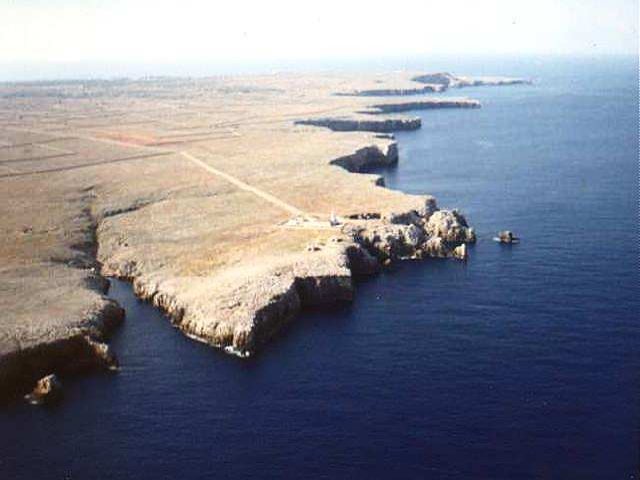
It is separated from neighboring Mallorca by a channel with a minimum width of 18 miles from Cap d'Artruix to Capdepera.
Mahón is 98 miles from Palma de Mallorca, 130 from Barcelona, 196 from Algeria, 218 from Marseille, 223 from Valencia, and 230 from Alghero (a town in Sardinia where Catalan is still spoken). It has a length of 47.800 km between the Cap de Bajolí and the spur of La Mola. Its maximum width is 19.500 km, its perimeter is 220 km, and its total surface area is 701.84 km2.
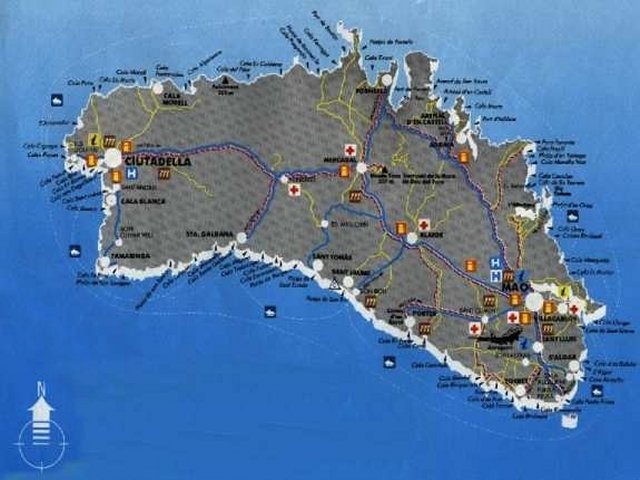
Geologically, Menorca presents two totally differentiated regions: the northern zone, or tramontana, and the southern one, or migjorn. The northern region, of about 267 km2, corresponds to the primary, secondary, and quaternary eras. (The primary element is a curious phenomenon not found in the other Balearic islands).
The migjorn sector (about 435 km2) has a uniform character and belongs to the tertiary era. However, the traditional division, as conceived for centuries by the people of the countryside, consists of five zones clearly differentiated by morphology and, above all, by agricultural factors: Tramontana, mitjania, migjorn, cap de ponent (western cape), and cap de llevant (eastern cape).
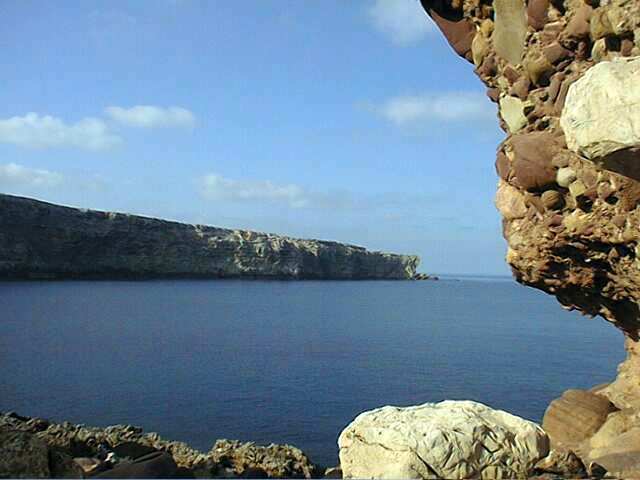
The climate of Menorca is temperate as a result of its location within the Mediterranean zone and its maritime condition. Interior towns have slightly more extreme temperatures than those on the coast.
The most pronounced meteorological phenomena are humidity and wind, especially the tramontana, which is cold and dry. Rains are usually frequent from September to November, preceded by storms at the end of August.

The Human Factor:
A fact of great importance for understanding the past of Menorca is that constituted by migratory movements. The immigrations recorded since the earliest times are as follows:
- Settlers of the troglodyte culture.
- Inhabitants of the talayotic settlements, in the Bronze Age
- Phoenicians
- Greeks
- Carthaginians
- Romans
- Vandals
- Byzantines
- Muslims
- Catalans and Mallorcans (conquest of 1287)
- English
- Jews
- Greeks, sailors and merchants established in Mahón
- French
- Spaniards
Emigrations correspond, first of all, to the different changes of cultures and dominations that followed one another in Menorca. Other notable emigrations were those that took place towards Florida in 1768, to Algeria in the 19th century, and later to South America (Córdoba - Argentina - and Montevideo).
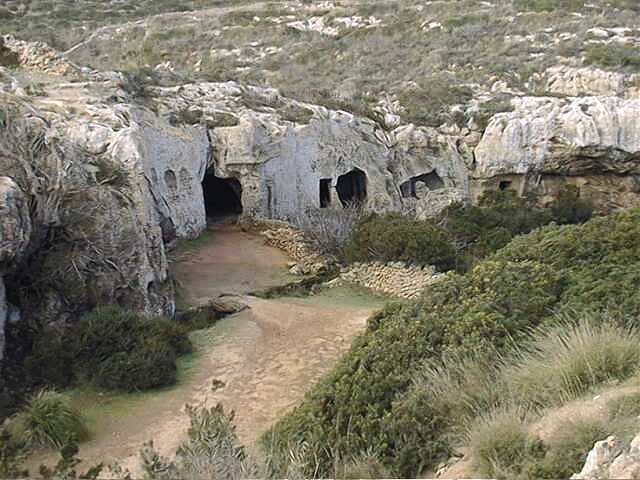
Prehistory:
The quantity of prehistoric remains found in Menorca is of exceptional importance, to the point of being considered an "open-air prehistoric museum." There are almost 2,000 classified remains, and their distribution is very diverse in the two zones into which, as we have already said, the island is geologically divided.
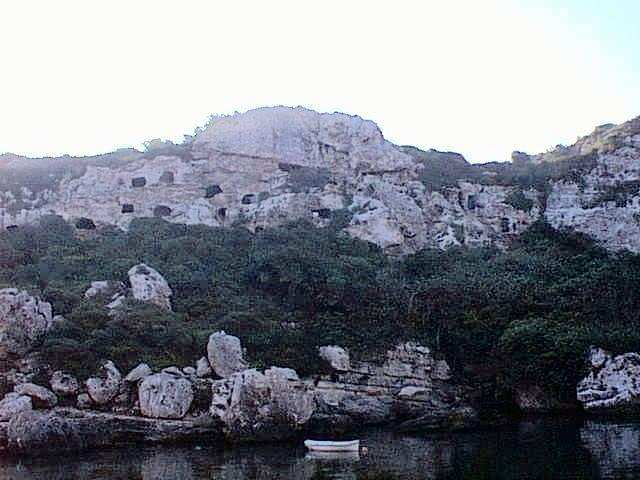
In very distant times, when the movements of the so-called "overseas peoples" conditioned the settlement of Mediterranean countries, they must have arrived on the Menorcan coasts in fragile boats, dragged by the furious tramontana. They were the first to inhabit the numerous caves they found in the barrancos, enlarging them and adapting them to their needs. Thus, the troglodyte or cave culture began in Menorca. The grottoes were natural or modified by man. They were open at ground level, underground, or high on the cliffs; with round, oval, rectangular, or trapezoidal entrances; with one or several chambers; and with or without columns.
One of the unequivocal signs that the grottoes served as dwellings was the circular hole opened in the ceiling to let smoke out when the cold, wind, and rain made it impossible to light fires in front of the entrance.
There are isolated caves or groups, sometimes numerous enough to form real troglodyte villages. The most important is that of Cales Coves, followed by the settlements of Cala Morell, Macarella, Torreta Saura, Barranc d'Algendar...
Many of these caves later served as burials. Later, some were enabled by farmers as stables, warehouses, haylofts, or even cisterns.
Despite the large number of discovered caves, there are undoubtedly more, which, hidden amidst the vegetation of the barrancos or among rocks and cliffs, jealously guard the millennial mystery of the unknown people who inhabited them.
Inside some caves, as well as on the walls of the barrancos, highly stylized rock carvings have been found: men, animals, fish, nets, boats, geometric designs...
The Talayotic Culture:
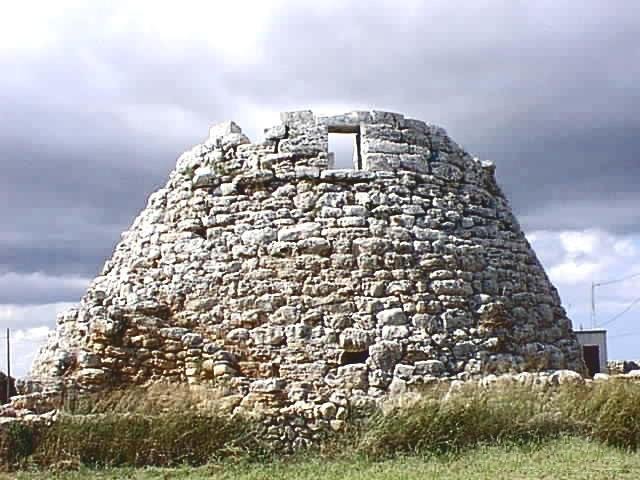
This is the era of greatest splendor in Menorcan prehistory, characterized by the abundance of colossal megalithic monuments. It dates from a relatively late age within the prehistoric chronology: the Bronze Age, which began around 1600 BC and lasted until approximately 200 BC.
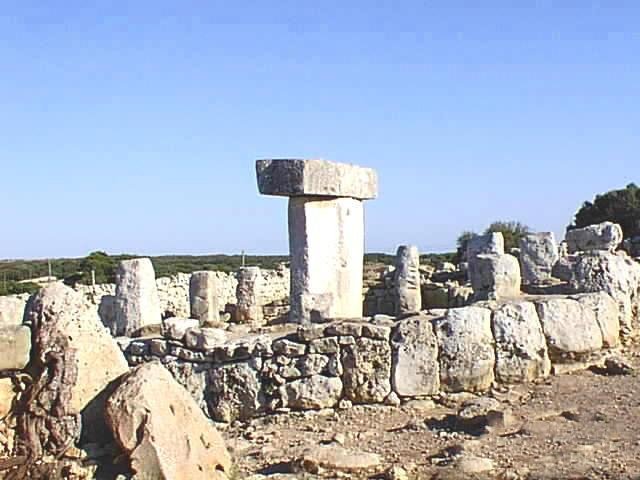
Man of this era stopped living in caves and built wooden houses; he became a farmer and rancher and formed settlements that he defended with walls and towers. Driven by his religious beliefs and the cult of the dead, he raised with great effort the colossal monuments that make Menorca a privileged region for the study of prehistory. The name of this culture derives from the most characteristic and widespread monument on the island: the talayot. The name comes from the Arabic "atalay" in the sense of a high building for surveillance. In addition to the talayots, there is an extensive typology of prehistoric monuments and remains in Menorca, such as those for military defense (Son Catlar, Torre d'En Galmés,...)
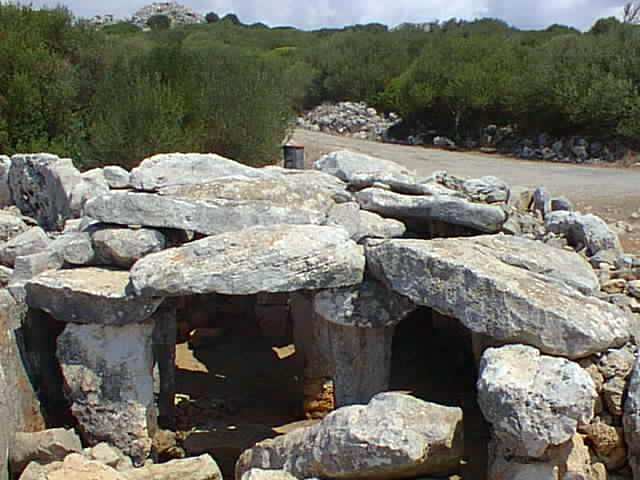
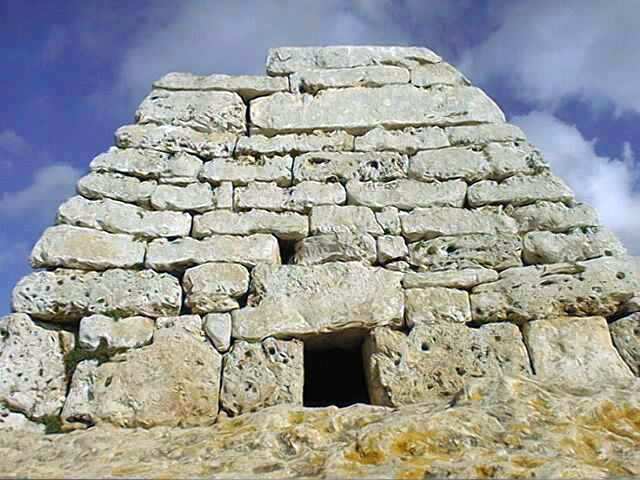
Commemorative ones like the menhirs (Torralba d'en Salort); religious ones par excellence, proper and exclusive to Menorca like the taula, formed by two large stones, one vertical and the other horizontal; and funeral ones like the navetas (the Naveta d'es Tudons).

Even during the height of the talayotic culture, Menorca was visited by peoples who crossed the Mediterranean either out of commercial desire or conquest. The Phoenicians were in Menorca, as shown by some metal objects and colored glass found. According to etymologists, they were the ones who named the island in honor of their god Baal. They also called it Nura, derived from Nur, which in the Phoenician language meant fire, as if referring to "land of fire." The Greeks also set foot on Menorcan land. Towards the middle of the 5th century BC, the Carthaginians occupied Menorca in an exclusively military domination. In the year 123 BC, the Romans conquered the Balearic Islands, which then received the name "Balearicus," Balearis Major or Majórica and Balearis Minor or Minòrica. The Balearic Islands depended politically on the province of Hispania Citerior, which had the important city of Tarragona as its capital. Later, in the final throes of the Roman Empire, the Balearic Islands formed a separate province. Its most important work was opening roads and connecting the various towns of the island. Archaeological finds are also notable, among which stand out burials, mosaics, inscriptions, bronze statues, numismatics, goldsmith objects, architectural elements, and ceramics.
In the year 427, the Balearic Islands fell into the hands of the Vandals. They were fanatics who cruelly persecuted the Catholic Church. In the year 534, the Byzantines wrested power of the island from the Vandals and it came to depend on the Eastern Empire. It was then that the Catholic cult was restored on the island.

MUSLIM DOMINATION
At the end of the 7th century, the Muslims took North Africa from the Byzantines, leaving only the Balearic Islands, which, without defense, soon succumbed to the force of Islamic expansion. The Muslim remains that remain in Menorca are of a spiritual and material nature.

MENORCA AS A TRIBUTARY OF ARAGON
In 1232, King James I the Conqueror, who was in Mallorca to subdue the Moors who had risen in the mountains, sent galleys to Menorca to negotiate the island's surrender or submission to the Crown of Aragon. The result was a tributary pact that was respected until 1282, when Peter III the Great, while passing through Menorca on his way to Africa, was betrayed by the island's Arab leaders. Peter III attempted the reconquest but died before achieving it and was succeeded by Alfonso III who, finally, on January 17, 1287, and after numerous struggles, took the island from the Muslims.
After the reconquest, the fate of the remaining Arab population differed according to their social and economic situation. According to the harsh norms of the time, the rich and socially well-placed were respected, while the poor, unable to pay the ransom, were enslaved. The defeated mixed with the Christian population and took Catalan surnames.
James II of Mallorca carried out a magnificent work in favor of Menorca. If his nephew and predecessor Alfonso III had conquered the island, the Mallorcan monarch would be the great organizer; the prudent orderer of all the structures that covered Menorcan medieval life. He founded new towns such as "Ihalor," rebuilt the walls, and was responsible for the famous document called "Pariatge," a regulation made jointly with the Bishop of Mallorca, of the existing parish and branch churches on the island.
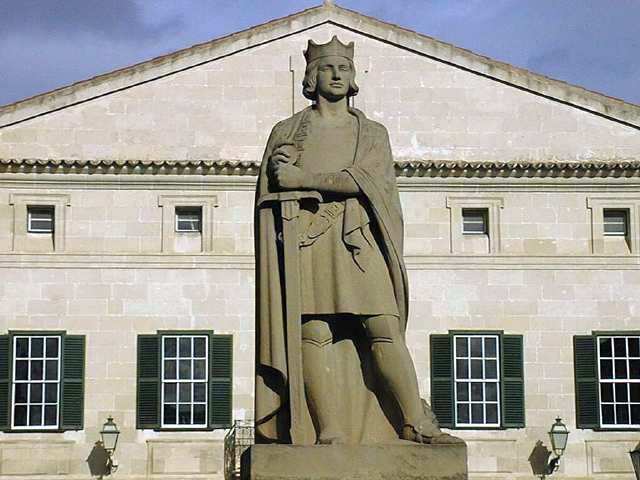
Menorca was incorporated into the Catalan-Aragonese kingdom in the year 1343, when Peter IV of Aragon was crowned king of Mallorca. In this same year and by decree of the monarch, the privileges of Menorca were consolidated and increased in royal charters. He created the Consulate of the Sea and also another administrative position that granted Menorca the right of representation in the Catalan courts.
Subsequently, after the death of Martin the Humane, the island suffered several processes of decadence where the negligence of the island's governors was added to by parties that degenerated into banditry and the threats of barbarians that caused the abandonment of agriculture in the coastal areas. All this contributed to Menorca becoming impoverished and depopulated rapidly. For this reason, Alfonso V, the Magnanimous, tried to repopulate the island, although not exactly with "good Catalan people," but by absolving of any crime all those who wanted to come and settle on the island, which in the long run would cause numerous and serious disturbances. Anarchy reached its peak in 1451-1452, dividing the islanders and sparking a long civil war. In short, Menorcan life became more difficult and dangerous every day and, as usually happens, political violence and dissension were joined by a great moral decay. As for medieval archaeology, it is generally poor. As the only medieval religious buildings, we have the main church of Ciutadella, today the cathedral of Menorca, begun at the end of the 13th century on the site of the old mosque. It is a beautiful example of Catalan Gothic. Another building from the period is the hermitage of the Mare de Déu de Gràcia in Mahón, a work of the 15th century. As military buildings, the San Roque Arch and some defense towers stand out, such as Torre Saura, Torre d'en Quart...
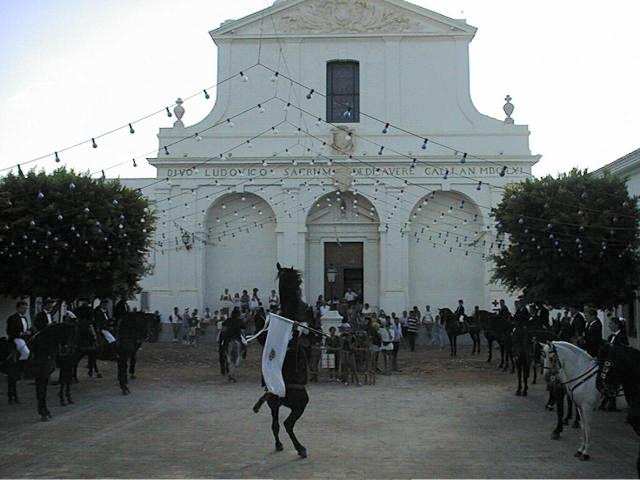
In numismatics, it is worth noting the coins made in Menorca by order of Alfonso V. From the same period and now outside of archaeology, we have the birth of the famous popular festival of Sant Joan in Ciutadella, which later spread to the other municipalities of the island.
In the 16th century, the expansion of the Turkish Empire, which dominated almost the entire Mediterranean and occupied half of Europe, along with the alliances maintained with the French kings to combat the Spanish, led to attacks on the island's coasts, causing the destruction of the two most important towns on the island: Mahón and Ciudadela.
The first assault was on Mahón in the year 1535 by the dreaded Hayreddin, Barbarossa, who, with his troops, razed the city, engaging in rape, assault, looting, murder, and even the burning of archives.
Later, in 1558, the same situation occurred in Ciudadela with the landing of 15,000 Turks who besieged the city.
The 17th century is extremely interesting for understanding the past of Menorca. On one hand, there was the social organization with the figure of the governor, whose primary concern was the fortification of the capital and the Menorcan coasts. During this period, the governor residing in Ciudadela was replaced by the mayor of the Castle of San Felipe. The institution that governed the administrative life of Menorca at that time was the so-called University. It was located in Ciudadela and composed of four juries, one for each estate of society: the military, of the nobles and knights; that of the citizens, the bourgeoisie; that of the peasants or "payeses"; and that of the artisans. In addition to the General University of Menorca and the specific one in Ciudadela, there were three external universities: those of Mahón, Alaior, and Es Mercadal.
The aristocracy also played a role of great importance, to such an extent that the social, political, military, and economic life of Menorca could not be conceived without the influence exercised by the nobles and knights. The military constituted an important element in those times when the island was constantly besieged by the enemies of Spain and pirate raids. The citizens were the career professionals (lawyers, scribes, notaries, and doctors who were more theoretical than practical). And, finally, the ecclesiastical institutions, whose highest figure was the Reverend and most Illustrious Lord "Pavorde" (dean) of Menorca, who had a voice and vote in the synods of Mallorca. It was an era dedicated to divine worship and religious festivities as the only cultural alternative.
There were numerous natural calamities: droughts, plagues of rats, caterpillars, locusts, etc., which caused hunger and hardship in the population and resulted in diseases such as cholera and plagues. In addition to these calamities, the Menorcans faced continuous incursions by pirates as well as the misdeeds of highwaymen, who inhabited the caves of the "barrancos" (ravines) and harassed travelers going from one town to another.
The architecture of the 17th century is very interesting and is reduced to four different classes:

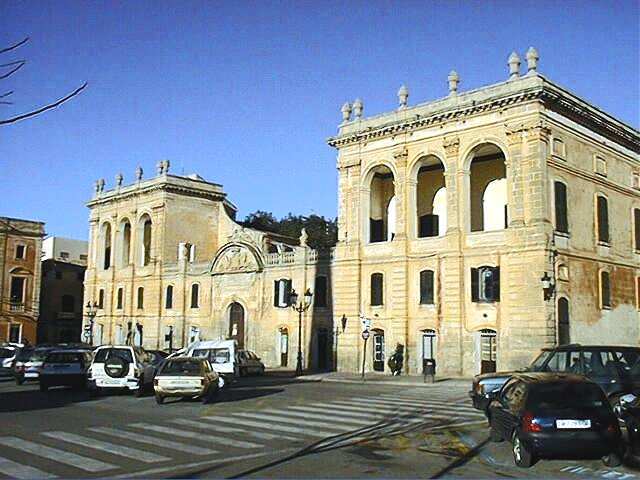
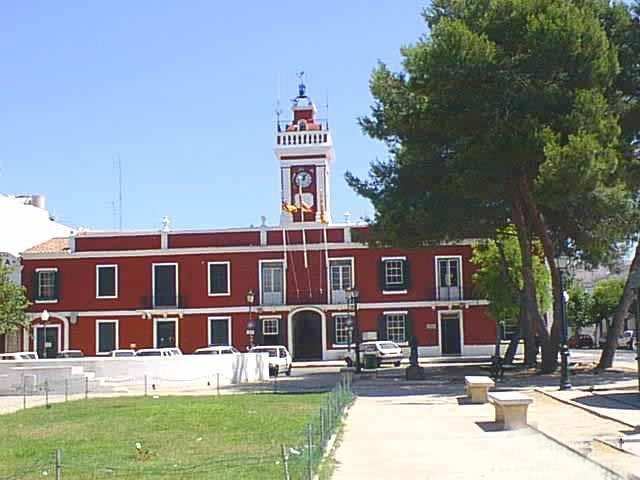
1.- Religious buildings such as the convent of the "Mare de Déu del Socors", of the Augustinian friars in Ciudadela. 2.- Military buildings such as the reconstruction of the walls of Mahón and Ciudadela. 3.- Among the civil buildings, the Town Hall of Mahón stands out, as well as some of the noble houses of Ciudadela.
An episode of the War of the Spanish Succession determined that for almost the entire 18th century, Menorca would depend on the major powers disputing hegemony in the Mediterranean: France and England. The reason was the island's privileged strategic situation; the importance of the port of Mahón and the fortress of San Felipe that defended its entrance.

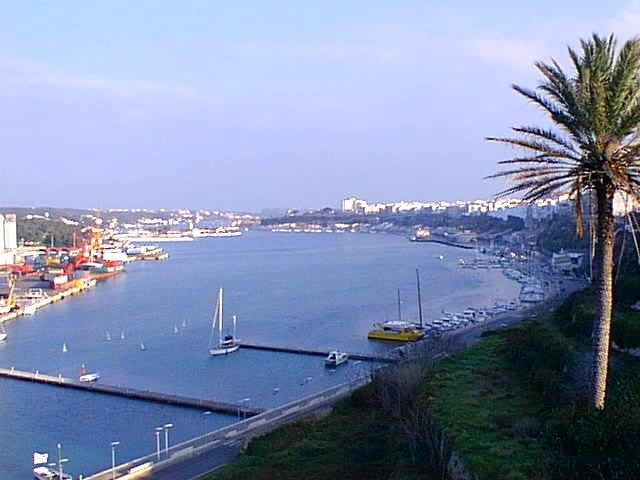
In 1708, Anglo-Dutch troops invaded Menorca, seizing power from Philip V, which became definitively public in 1713. The governor Richard Kane moved the island capital to Mahón. He built the road called "Kane's Road," which still exists today as a local road. He effectively protected agriculture and livestock and regulated administration, industry, and commerce.
In the year 1756, the French invaded the island, and the 300 English soldiers defending it surrendered. The main work of the new rulers was the founding of the town of Sant Lluís (in honor of Louis XV, King of France).

Also, during the French occupation, the "Camí de Cavalls" (horse path) was rebuilt, which possibly originated in the Middle Ages and forms a ring road around the entire coast. This occupation was brief, between 1756 and 1763, the year in which the Treaty of Paris forced France to return Menorca to its former rulers: the British. In 1771, General Moytin ordered the construction of a new suburb near San Felipe, which was named George-Town in honor of the English King George III and is today known as Es Castell.
Menorca became Spanish once again under the reign of Carlos III, who, in deference to France, a nation allied by a Family Pact, appointed the Frenchman Duke of Crillon as captain general. During this period, the destruction of the Castle of San Felipe was ordered, work on which had begun in the 16th century under the command of Charles I.
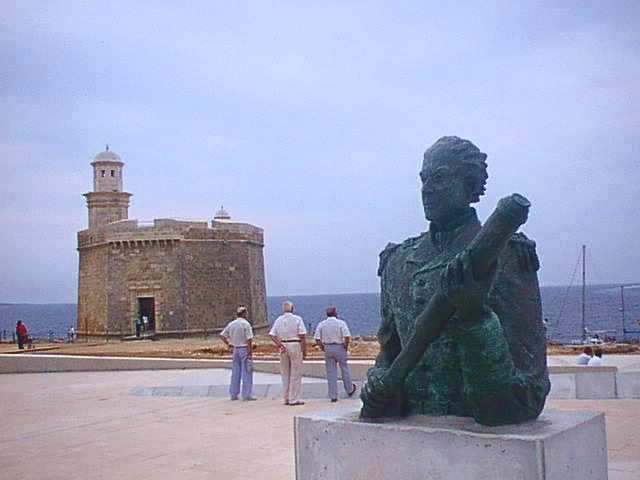
In 1798, Menorca was once again English following incursions by their fleet, first in the Port of Addaia and Cala Molí, and finally in Ciudadela. On November 15, 1798, General Quesada surrendered to the English troops, thus beginning the third British occupation.
However, in 1802, through the Treaty of Amiens, the island returned to and became definitively part of the Spanish crown.

With the improvements made during the English occupations to roads, fortresses, industry, livestock, and commerce, all sectors of the island were clearly reinforced in the 18th century. One of the most important aspects of Menorcan culture in the 18th century, in its final decades, was the birth of a literary movement that continued during the first third of the following century and formed a true "Menorcan era" within Catalan literature.
It refers to the "Sociedad Mahonesa de Cultura" created on April 30, 1778.
Other cultural data of interest from that time were the first publication of the history of Menorca. The work of the painter Giuseppe Chiesa portraying the figures as well as the historical events of Menorca during those years. The 18th-century architecture in Menorca features monuments of different styles and purposes, such as the church of Sant Francesc in Mahón in the decadent Gothic style (1719-1792).
The church of El Roser in Ciudadela (1705-1750) is of Baroque style, while the church and former convent of El Carmen in Mahón is Neoclassical (1726-1750). Cabinetmaking was of great importance, with luxury English-style furniture being produced during this period for the manor houses.
In the first half of the 19th century, the economic life of the Menorcans was very precarious, which led to numerous emigrations both to Algiers, the capital, and to the town of Fort de L'Eau.
In the year 1835, the Mendizábal Disentailment Law extinguished the life of the six convents existing on the island. In 1860, Queen Isabella II landed on the island accompanied by other authorities. In 1867, the first admiral of the United States of America, David G. Farragut, son of the Ciutadella native Jordi Farragut, arrived in Menorca.
In terms of culture, in addition to the literary flourishing, the 19th-century Menorca did not lack illustrious figures, some with influence outside the island. Although many of them were children of the 18th century, they expressed their full potential in this century, such as the Mahón-born painter Pascual Calbó Caldes (1752-1817), director of the Imperial Academy of Fine Arts in Vienna. Dr. Mateu Orfila Rotger (Mahón 1787 - Paris 1853); Josep Mª Quadrado (Ciudadela 1819 - Palma 1896). Among the architectural works, the main facade of the cathedral stands out, as well as many manor houses in Mahón and Ciudadela.
Starting in 1868, coinciding with the triumph of the Revolution, the urban expansion of Menorcan towns began. The walls of Mahón and Ciudadela were destroyed, sacrificing tradition in favor of new hygienic trends and the demands of demographic growth. "Wide" streets were built, and in the coastal areas, summer houses began to flourish. The opening of the first shoe factory in 1853 was the start of a new industry that became the foundation of the economy at that time, lasting until the end of the following century. It was followed by the costume jewelry industry, also very flourishing within the Menorcan economy.
The construction in 1860 of the Mahón-Ciudadela general road increased communication between the inland towns, and as for the exterior, the first mail route between Mahón and Barcelona, which stopped in Alcudia, was established in 1854. At the end of the 19th century and the beginning of the 20th, there were great emigrations to Cuba, Córdoba in Argentina, and Montevideo.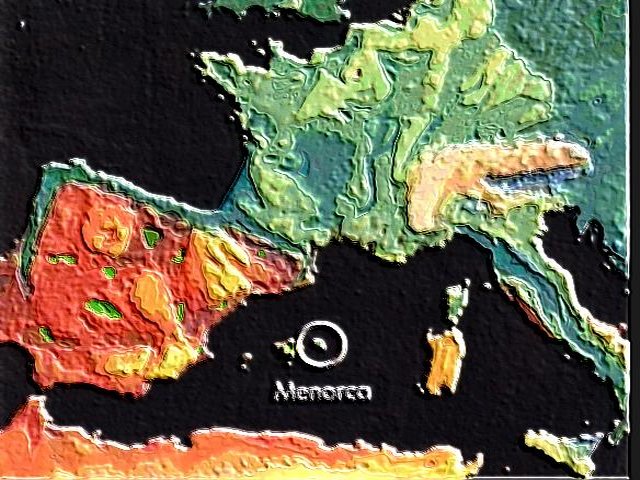 Europe-Menorca
Punta Nati